
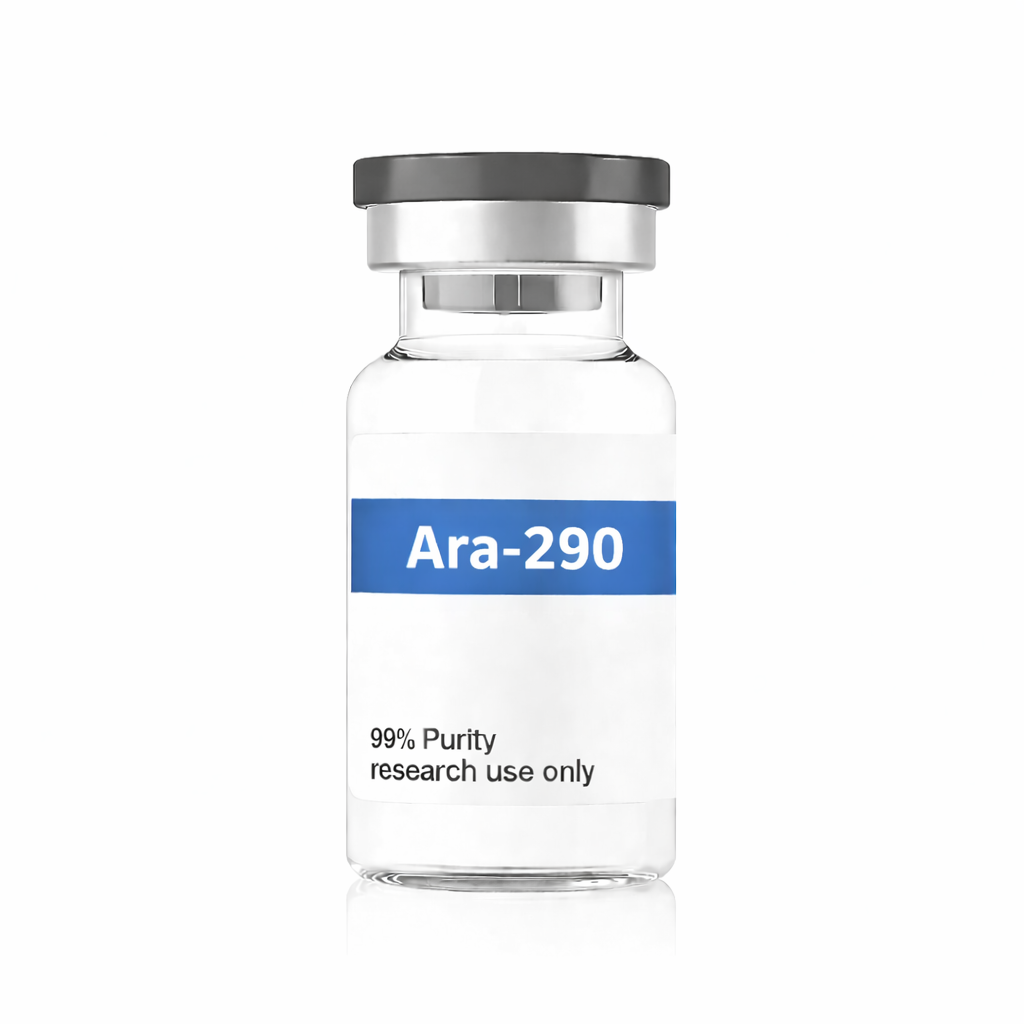
Description
ARA-290 (Cibinetide): Comprehensive Guide
What Is ARA-290?
ARA-290, also known as Cibinetide, is a synthetic peptide derived from erythropoietin (EPO). Unlike traditional EPO, ARA-290 was engineered to retain tissue-protective and anti-inflammatory properties without stimulating red blood cell production.
Because of this unique profile, ARA-290 has become a significant focus in scientific and biomedical research, particularly in studies involving inflammation, neuropathy, and tissue protection.
How ARA-290 Works (Mechanism of Action)
ARA-290 selectively activates the innate repair receptor (IRR) rather than the classical erythropoietin receptor.
Key Mechanisms:
-
Modulates inflammatory signaling pathways
-
Supports cellular repair processes
-
Reduces inflammatory cytokine activity
-
Protects neural and vascular tissues
This targeted mechanism allows ARA-290 to offer cytoprotective effects without hematopoietic stimulation, making it distinct from standard EPO compounds.
Potential Research Benefits of ARA-290
⚠️ For research and educational purposes only. Not intended for human consumption.
Based on existing preclinical and clinical investigations, ARA-290 has been studied for its potential role in:
-
Inflammatory response modulation
-
Neuropathic pain research
-
Small fiber neuropathy studies
-
Tissue and organ protection
-
Metabolic and autoimmune condition research
Researchers value ARA-290 for its selective signaling and improved safety profile compared to traditional erythropoietin derivatives.
ARA-290 vs Erythropoietin (EPO)
| Feature | ARA-290 | Erythropoietin |
|---|---|---|
| Red blood cell stimulation | No | Yes |
| Tissue protection | Yes | Yes |
| Inflammatory modulation | Yes | Limited |
| Cardiovascular risk | Low | Higher |
| Research specificity | High | Moderate |
This distinction makes ARA-290 a preferred compound for inflammation and neuropathy research.
Safety Profile & Research Considerations
ARA-290 is designed to avoid erythropoietic side effects, reducing risks such as elevated hematocrit levels. However:
-
Long-term effects are still under investigation
-
Usage should remain strictly within controlled research settings
-
Handling must comply with laboratory safety standards
Why ARA-290 Is Gaining Attention in Research
-
Highly selective receptor targeting
-
Favorable safety profile
-
Broad therapeutic research interest
-
Increasing number of peer-reviewed studies
These factors position ARA-290 as a promising peptide in modern biomedical research.
Frequently Asked Questions FAQ
What is ARA-290 used for?
ARA-290 is primarily used in scientific research exploring inflammation, neuropathic pain, and tissue protection mechanisms.
Is ARA-290 the same as Cibinetide?
Yes. ARA-290 and Cibinetide refer to the same peptide compound.
Does ARA-290 increase red blood cell count?
No. ARA-290 was specifically designed not to stimulate erythropoiesis, unlike erythropoietin.
Is ARA-290 approved for medical use?
ARA-290 is not approved as a pharmaceutical drug and is intended for research purposes only.
How is ARA-290 different from EPO?
ARA-290 activates tissue-protective pathways without affecting red blood cell production, offering a safer research profile.
Are there known side effects of ARA-290?
In research settings, ARA-290 has shown a favorable tolerance profile, but comprehensive safety data is still being studied.


Reviews
There are no reviews yet.