

Description
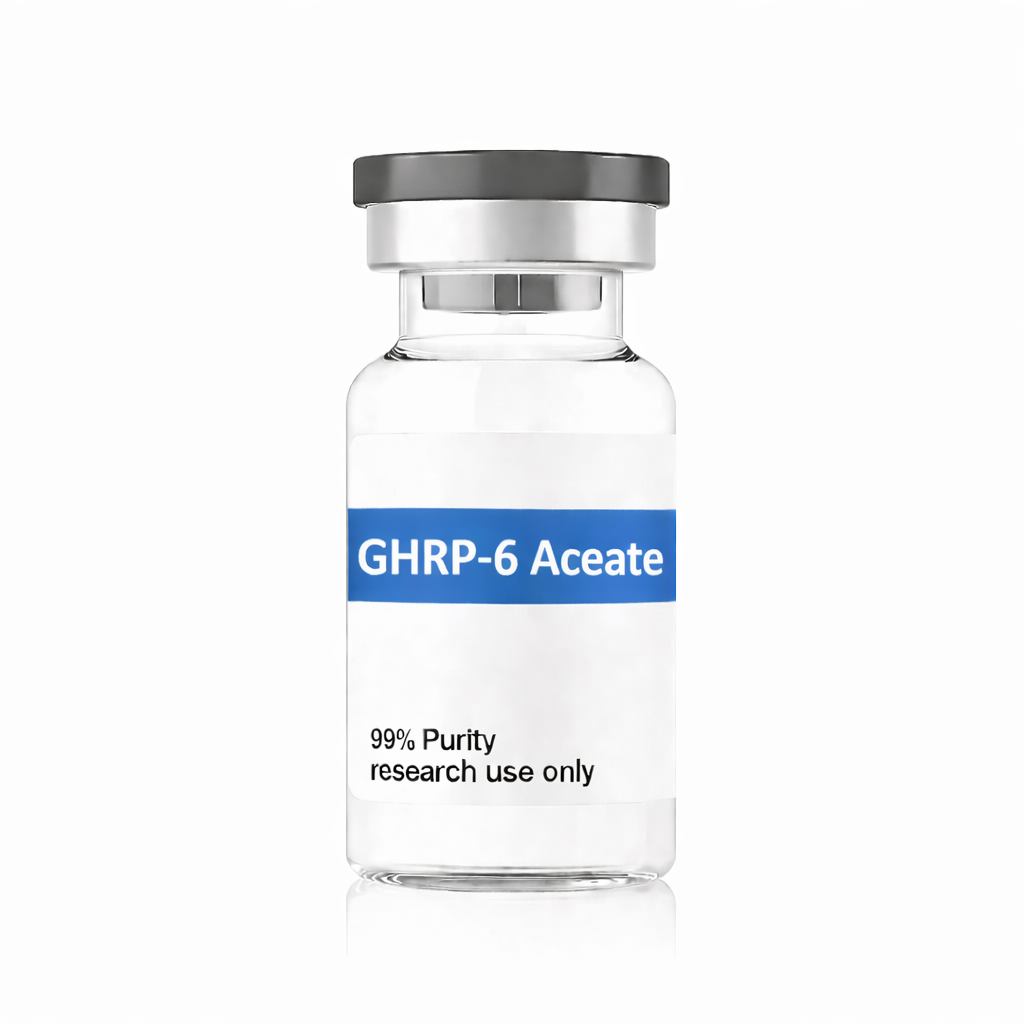
What is GHRP-6?
GHRP-6 is a synthetic peptide classified as a growth hormone secretagogue. These compounds are being investigated for their ability to stimulate the body’s natural release of growth hormone by interacting with specific receptors involved in hormonal signaling.
GHRP-6, which was initially developed for research purposes, has received a lot of attention in the scientific community due to its unique interaction with the ghrelin receptor, which regulates appetite and growth hormone levels.
How Does GHRP-6 Work?
GHRP-6 functions by interacting with growth hormone secretagogue receptors (GHS-R). Unlike synthetic growth hormone, GHRP-6 does not introduce additional hormones into the body. Instead, it is being studied to see how it may stimulate the pituitary gland to release endogenous growth hormone.
GHRP-6 and Scientific Research
In laboratory and academic settings, GHRP-6 has been studied for its potential role in
-
Growth hormone signaling pathways.
-
Hormonal responses associated with appetite
-
Endocrine System Research
-
Peptide-receptor interaction
Researchers frequently study GHRP-6 in conjunction with other peptides to gain a better understanding of how the body regulates growth hormone release naturally.
Potential effects are being studied.
While results vary depending on the experimental design, research discussions about GHRP-6 frequently explore:
-
Growth hormone stimulation patterns.
-
Short biological half-life, receptor activity.
-
Synergistic interactions with other secretagogues
Any mention of “benefits” in scientific literature refers only to research findings, not approved therapeutic outcomes.
GHRP-6 versus other growth hormone peptides
GHRP-6 is frequently compared to related peptides because of differences in receptor affinity, signaling intensity, and biological response profiles. These comparisons allow researchers to determine how minor molecular differences affect endocrine behavior.
Final thoughts.
GHRP-6 is still a topic of interest in peptide and hormone research due to its receptor-based mechanism and role in growth hormone signaling studies. As with any research compound, accurate information, transparency, and responsible presentation are required.











Reviews
There are no reviews yet.