
Description
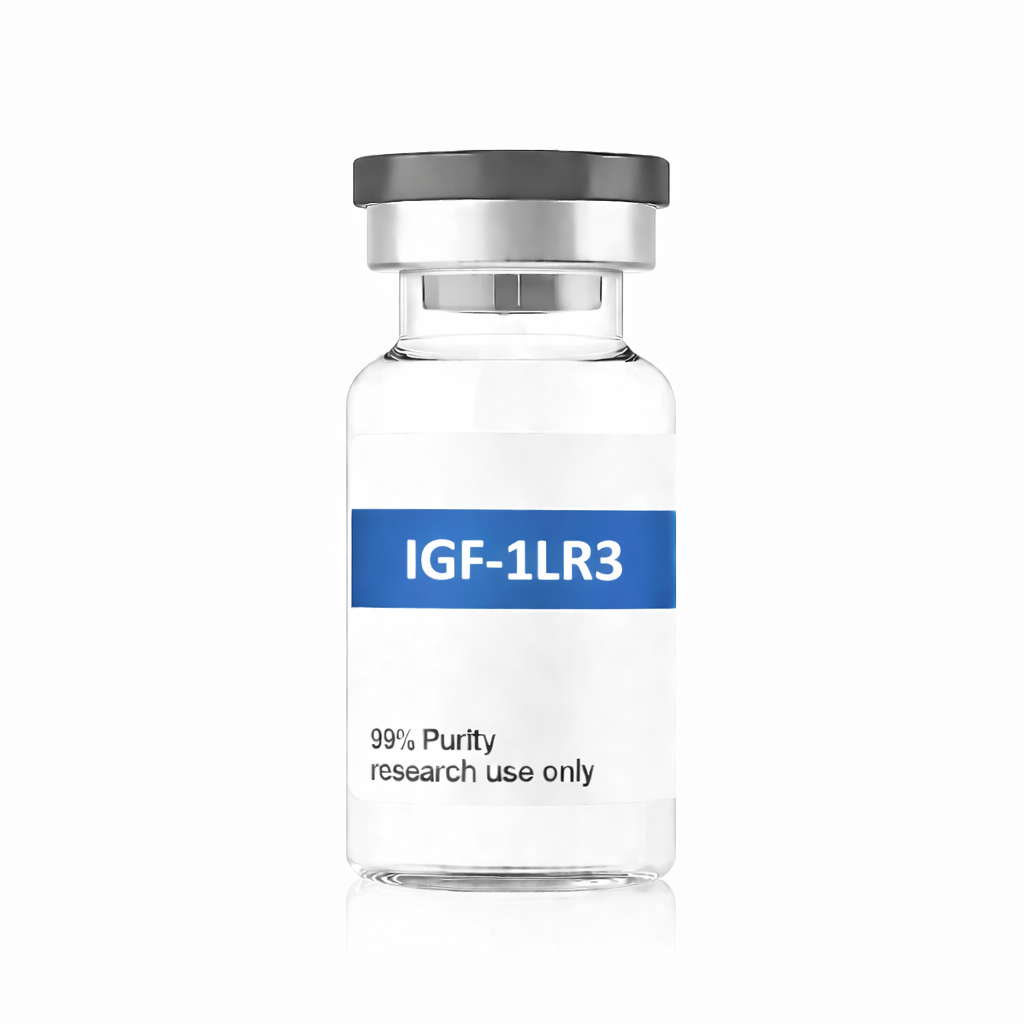
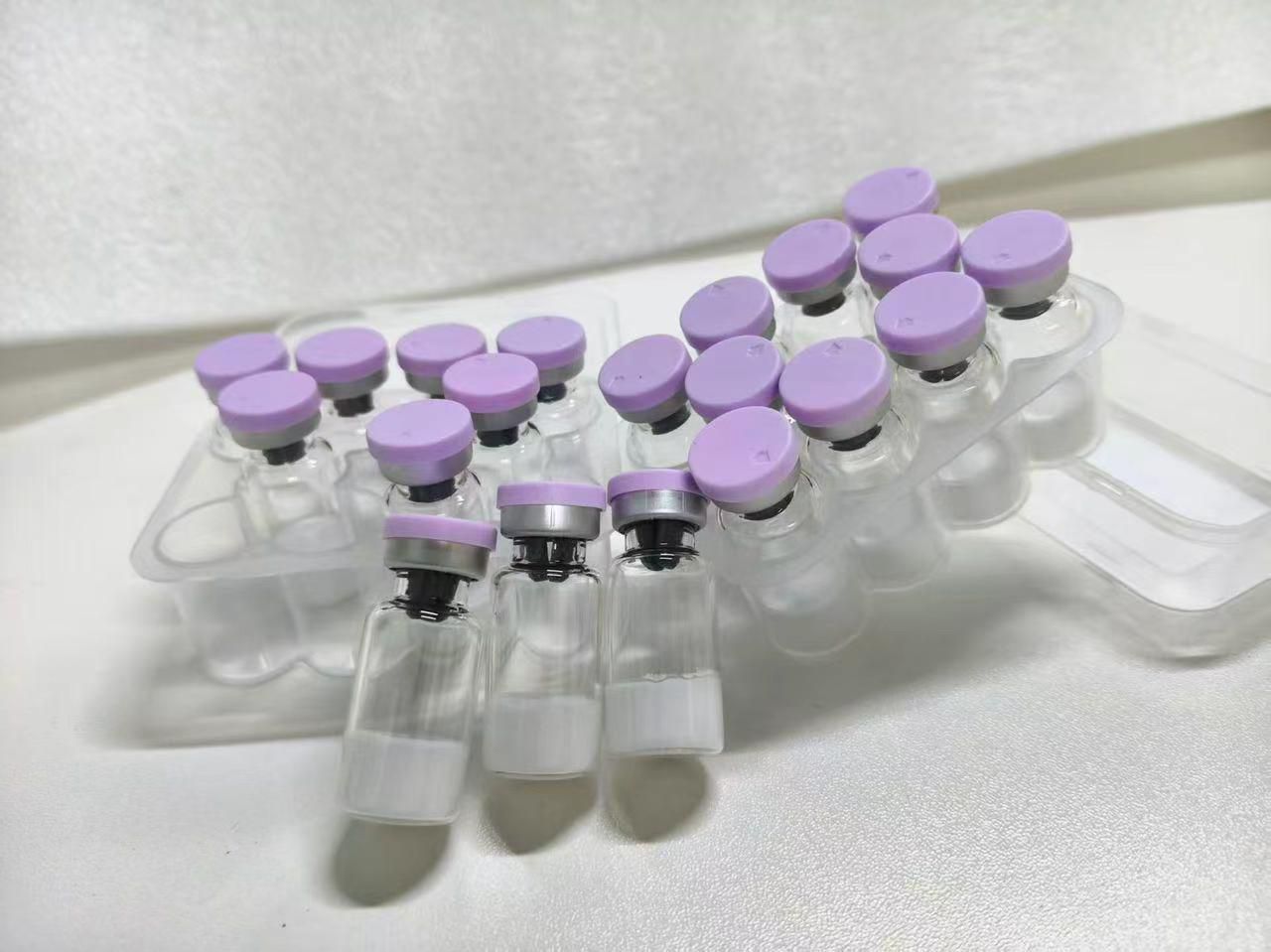
IGF-1 LR3 – Comprehensive Research Overview, Benefits & Properties
IGF-1 LR3 (Insulin-Like Growth Factor-1 Long R3) is a modified analog of IGF-1 that is widely studied in scientific and laboratory research settings. Due to its extended half-life and enhanced bioavailability compared to standard IGF-1, IGF-1 LR3 has become a popular compound in peptide and cellular research.
IGF-1 LR3 interacts with IGF-1 receptors and insulin receptors, playing a role in cellular growth, differentiation, and metabolic signaling pathways. Its unique molecular structure allows it to remain active in the bloodstream for a significantly longer period, making it especially valuable for controlled research environments.
What Is IGF-1 LR3?
IGF-1 LR3 is a synthetic peptide derived from natural Insulin-Like Growth Factor-1. It has been modified by:
-
Adding 13 amino acids to the N-terminus
-
Substituting arginine at position 3
These modifications increase resistance to binding proteins and enzymatic degradation, allowing IGF-1 LR3 to maintain activity for up to 20–30 hours in research models.
IGF-1 LR3 Mechanism of Action
In laboratory studies, IGF-1 LR3 has demonstrated the ability to:
-
Bind strongly to IGF-1 receptors
-
Activate intracellular signaling pathways related to cell proliferation
-
Influence protein synthesis and glucose uptake
Because of these properties, IGF-1 LR3 is frequently researched in:
-
Cellular regeneration studies
-
Muscle cell differentiation research
-
Metabolic and growth factor signaling experiments
IGF-1 LR3 vs Standard IGF-1
| Feature | IGF-1 | IGF-1 LR3 |
|---|---|---|
| Half-life | Minutes | 20–30 hours |
| Binding protein resistance | Low | High |
| Receptor affinity | Moderate | High |
| Research stability | Limited | Enhanced |
This comparison explains why IGF-1 LR3 is often preferred in extended research protocols.
Research Applications of IGF-1 LR3
IGF-1 LR3 is commonly utilized in:
-
In-vitro cellular growth studies
-
Tissue regeneration research
-
Signal transduction experiments
-
Growth factor interaction analysis
⚠️ Important Notice: IGF-1 LR3 is intended for research use only and is not approved for human consumption or medical use.
Storage & Stability (Research Guidelines)
To maintain peptide integrity in laboratory settings:
-
Store lyophilized IGF-1 LR3 at -20°C
-
Reconstituted solutions should be refrigerated and used promptly
-
Avoid repeated freeze-thaw cycles
Proper storage ensures consistent experimental results.
Why IGF-1 LR3 Is Widely Studied
Researchers value IGF-1 LR3 for its:
-
Extended biological activity
-
Enhanced receptor interaction
-
Predictable performance in controlled environments
These characteristics make it a reliable compound for long-term experimental analysis.
Reviews
There are no reviews yet.